
How to Value and Choose an Australian Opal
Reviewed by David van Niekerk FGAA — Fellow of the Gemmological Association of Australia, GIA diamond qualification, qualified valuer. Masterpiece Australian Opal Jewellery, East Circular Quay, Sydney (since 1982).
In short: an Australian opal's value comes mainly from five things — its type and body tone, the brightness of its play-of-colour, the colours and pattern it shows, its size and cut, and whether it is a solid opal or a doublet or triplet. No formula prices an opal; two stones of the same size can differ many times over. That is why every opal should be judged in person, under moving light.
What type of opal is it, and what is its body tone?
Body tone is the background colour behind the play-of-colour, from black through grey to white.
 |
 |
 |
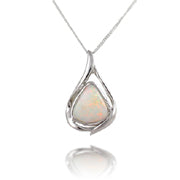 |
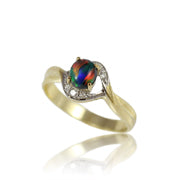
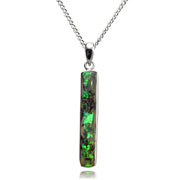
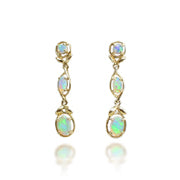
| black opal | boulder opal | crystal opal | white opal |
- Black opal (dark body tone, mostly from Lightning Ridge, NSW) is the rarest and usually the most valuable — the darker the body, the more vividly the colour stands out.
- Boulder opal (Queensland) forms in ironstone; the brown matrix is part of the stone, and the best pieces show a dark, bright face.
- Crystal opal is transparent to semi-transparent with bright colour — here clarity and transparency add value.
- White (light) opal (Coober Pedy and South Australia) has a milky body; bright colour on a light body is what to look for.
So "more transparent means more valuable" is true of crystal and light opals only. On a black opal it is the dark body that is prized.
How bright is the play-of-colour?
Brightness — how vividly the colour flashes as the stone moves — is the single biggest value factor after type. A dull stone with many colours is worth less than a brilliant stone with one or two. Look at it under moving light, not a fixed spotlight.
Which colours and pattern does it show?
Red is the rarest play-of-colour, then orange, yellow, green and blue. But brightness wins: a vivid blue-green is worth more than a dull red. Broad, bold patterns (such as harlequin or broad flash) are generally rarer than fine "pinfire" patterns. Colour should show across the whole face, from more than one angle.
Does size and cut matter?
Opals are weighed in carats (one carat is 0.2 g) and measured in millimetres. All else equal, a larger solid stone is worth more — but thickness and a well-domed cabochon matter too, and a thin or lopsided stone can look large and be worth less. Freeform shapes that follow the colour can be the best stones of all.
What reduces an opal's value?
Cracks, sand or "potch" (colourless common opal) on the face, windows where colour disappears from some angles, and poor polish.
Solid, doublet or triplet — what is the difference in value?
A solid opal is one whole natural stone and is valued far above a composite. A doublet is a thin slice of natural opal bonded to a dark backing; a triplet adds a clear protective cap. Both are genuine opal and beautiful, honest choices at a lower price — but they should always be described as doublets or triplets. At Masterpiece every composite is labelled as one. See Solid, Doublet & Triplet Opal — What's the Difference?
Does where it was mined matter?
Yes — Australian opal, and Lightning Ridge black opal in particular, is the most sought after. See Where Our Opals Come From.
Is an opal a good investment?
Fine natural opal is rare and is often handed down as an heirloom, but we do not promise that any stone will rise in value, and nothing here is financial advice. Buy an opal because you love it.
Can you value an opal I bought from you?
Yes. As qualified valuers we can provide a valuation for opal jewellery purchased from Masterpiece. We do not value pieces bought elsewhere. Contact us to arrange one.
Australian opal is like fingerprints — no two are the same. We'd be honoured to help you find the one that tells your story.